Wednesday, October 30, 2013

Editing


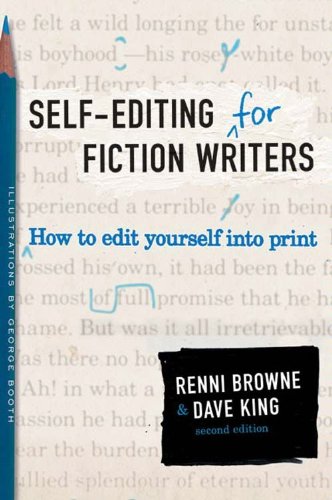
Self-Editing for Fiction Writers: How to Edit Yourself into Print
    

It seems like everyone hates editing. I like editing. When I’m editing I’m reading my novel, and I like my novel, so I enjoy reading over it again and crafting it into something better. Maybe I’m weird.

After I had already edited my novel to what I thought was near perfection, I read a book called “Self-Editing for Fiction Writers: How to Edit Yourself Into Print” by Renni Browne and Dave King. This book helped me a lot. When I read the first few chapters I thought I’ve got this, but when I got to the chapters on dialog mechanics and resisting the urge to explain everything, I realized I had a lot of work to do. So I did another couple of rounds with those things in mind.

The book also suggests that you read everything aloud as part of the process. I did this too and I was amazed at the things I hadn’t noticed in all my silent readings, like words that were repeated three or four times in one paragraph, and sentences that didn’t have quite the right flow.

I feel like the whole process has been really good practice. Learning to edit makes your writing better.

Saturday, October 26, 2013

Illustration Weekend Links

For the illustrators out there, or writers who want a peek at the illustrator world, here's three great (and short) videos:

Lynne Chapman describes the process of illustrating Bears on the Stairs in this five-minute video:
 

One of my favorite illustrators, Mark Buehner, shares a three-minute video about illustrating:
 

A 10-minute video by Kathleen Kemly about illustrating Molly by Golly:


Friday, October 25, 2013

The Plunge

Taking myself seriously as a writer has been the biggest hurdle in my progress. I toyed around with ideas I'd had for years, until I finally decided to write them down. Once I had them on paper, I realized I'd taken a step into the territory of a writer.  

I had to decide, do I keep going or cloister my stories in the safety of my hard drive? But there were ideas coming out in my writing that needed their own life, so I made another move, quite literally.

Wednesday, October 23, 2013

Where Do I Start?


I used to have this idea that when an author wrote a book, he or she started on the first page, typed “Chapter One,” and wrote from the beginning to the end. Don’t they do it that way in movies? 

A few years ago I started to try to write a novel, but I couldn’t get it to go anywhere. The story wouldn’t take off. I knew what the book was going to be about, who it was going to be about and how it was going to end, but whenever I tried to write, it always turned into a journal entry instead. 

Friday, October 18, 2013

Weekend Links


Brilliantly simple advice in less than five minutes by Neil Gaiman, author of Coraline.

Maria Popova, from Brain Pickings, talks about Ray Bradbury's book, Zen in the Art of Writing. She mentions his use of lists as a method of inspiration. Here's a sample quote:
"I was beginning to see a pattern in the list, in these words that I had simply flung forth on paper, trusting my subconscious to give bread, as it were, to the birds."

And to fill your artist's bucket, an unbelievable display of chalk art:


 Happy Weekend.


Wednesday, October 16, 2013

Kick the Critic to the Curb


Blech--oranges don’t taste so good after you've brushed your teeth.

On a more flavorful note, I’ve been reading The Artist’s Way, by Julia Cameron. I’m ashamed to admit it’s taken me this long read her book, but it’s part of my assignment for the picture book class I’m taking.

Monday, October 14, 2013

10,000 Hours, Really?


In my reading lately I was reminded of Malcolm Gladwell's observation in Outliers that it takes 10,000 hours of practice to master a skill. The idea that all 10,000 hours don't need to be deliberate practice hours is intriguing. Elizabeth Hyde Smith in Make Art Make Money suggests that as we look back on our life in relation to what it is we are trying to master we can see many different ways we have been practicing all along. In my, case as an artist, when I look back I see many melted crayons: some in the car from leaving them behind by accident, some near the porch from sitting in the sun drawing too long, some specifically melted to get a certain effect on a project. I would explore my dad's art making tools wondering what each was for. I learned that Xacto blades are really sharp and when used with enthusiasm can sometimes cause trips to the hospital for stitches. Mom's are good to provide transportation in such a case.

The hours turning tissue boxes, brass fasteners and other bits of this and that into cars for Barbie dolls and friends; hours making up the stories that went with all the stuff that my friends and I made, using our imagination to see what we could make from the bits of this and that-- all of these hours are part of my 10,000. Look back, see the connections, how many of those hours do you already have? What can you do to get more of those hours in a similar way? How can you follow the passion you've had for such a long time? I think I'll look for my answers as I dream as I did as a child and play a bit more so my work can be more play.